
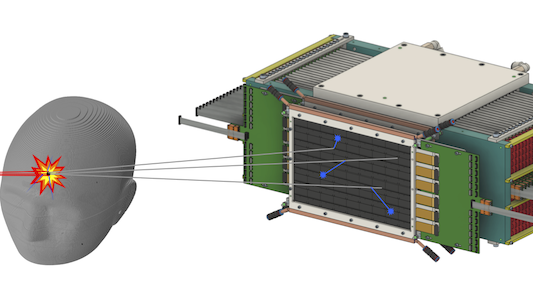
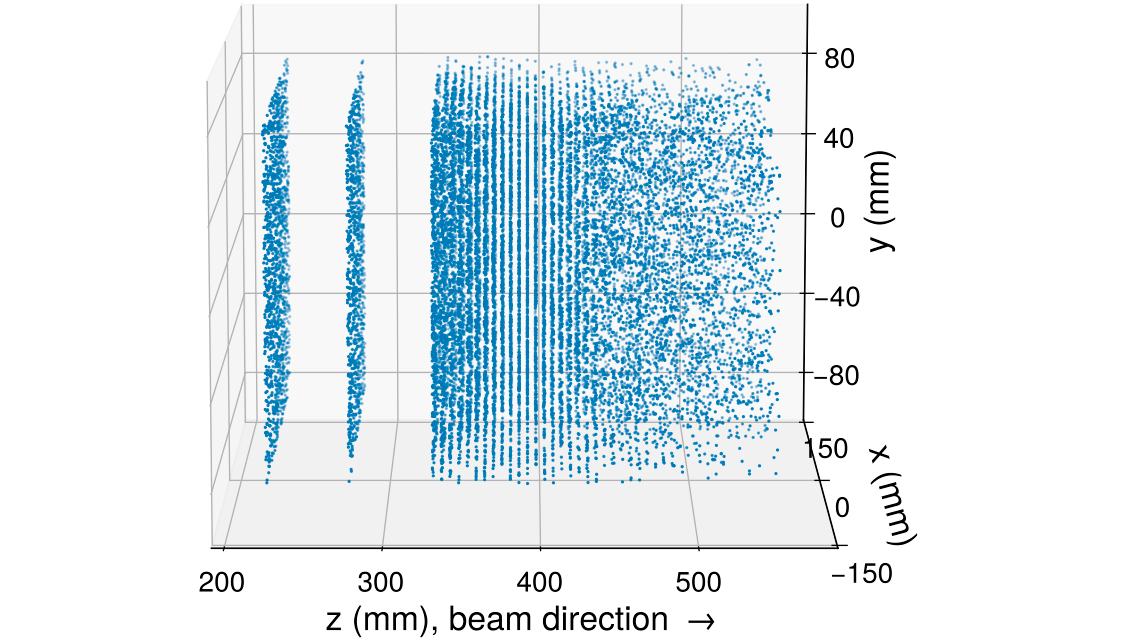
Proton Range Verification with a Digital Tracking Calorimeter
Machine learning approach for proton therapy quality control using uncertainty-aware Bragg peak prediction with a silicon pixel telescope detector.
Data Science | Machine Learning | Software Engineering
Passionate about solving complex problems using data, machine learning, and elegant code to drive meaningful insights and innovation in medical physics, education, and beyond.
I build pragmatic software and data tools that help teams make better decisions. I focus on clear, reliable solutions and enjoy turning messy datasets into understandable, actionable insights.
I hold an M.Sc. in Computer Science from TU Darmstadt and am currently pursuing a Ph.D. at RPTU University Kaiserslautern-Landau, where I am applying machine learning techniques to medical physics problems.
Machine learning, statistical analysis, visualization
Python, C/C++, Swift, C#, PHP, SQL, CI/CD, Testing
Academic writing, peer review, publications
Machine learning approach for proton therapy quality control using uncertainty-aware Bragg peak prediction with a silicon pixel telescope detector.
Graph neural network implementation for proton range verification in particle therapy, leveraging spatial relationships in detector data.
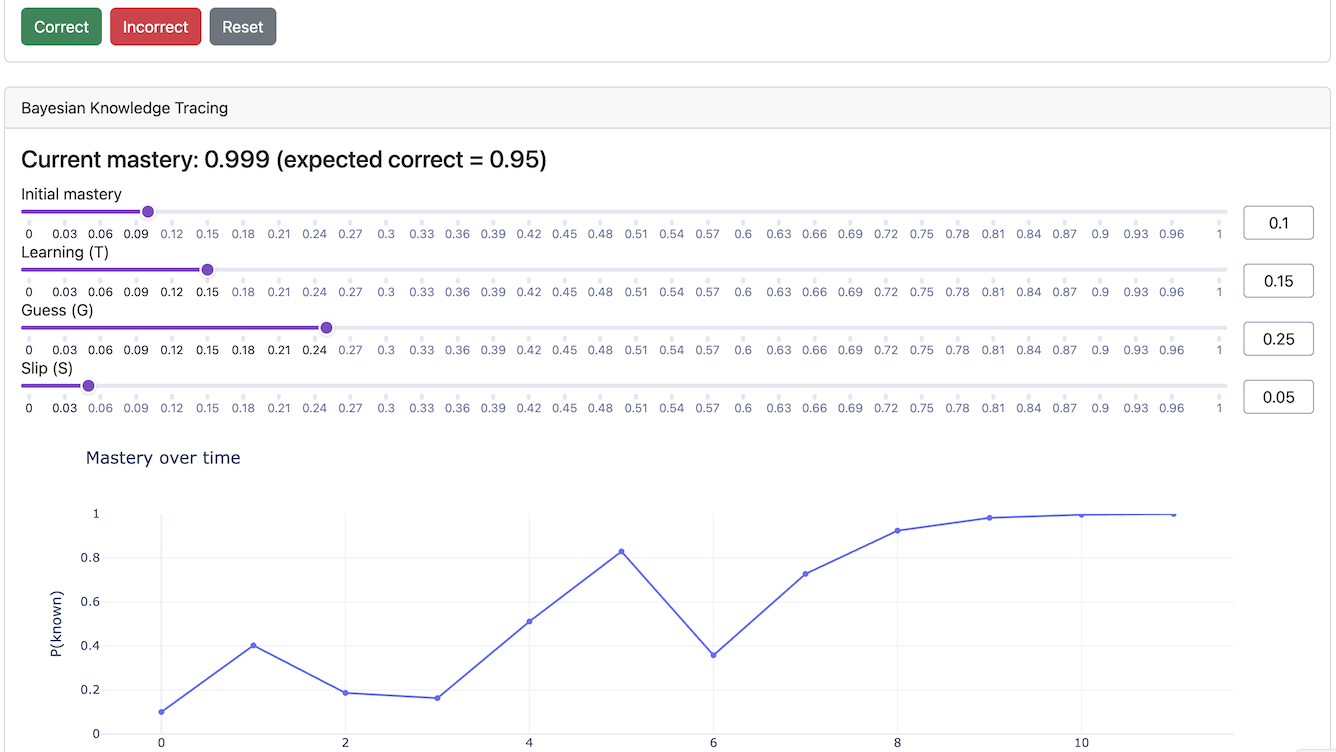
Open learner modeling system and dashboard for educational applications, providing transparent insights into student learning processes and knowledge states.
Educational project combining tabletop role-playing games with machine learning concepts to teach fundamentals with relatable applications.
Investigates charge diffusion modeling for ALPIDE silicon pixel detectors in proton therapy, showing how detector response models affect proton computed tomography and in-situ range verification performance.
Introduces a quality metric for proton therapy based on uncertainty-aware Bragg peak prediction and spot rejection, enabling treatment-quality assessment through machine learning.